I was invited to the Re-thinking Food Conference that took place Feb. 18, 2019 by the Israel Export Institute to bring to you the aspect of food waste solutions in food-tech!
(learn more about the speakers and the conference here – https://www.export.gov.il/school/event/rethinking-food-conference-2019)

Here are my highlights:
1. Laziness sparks reduced food waste
Ms. Carol Ortenderg from Nosh.com (Instagram –@noshdotcom) shared that food companies are making it easier for consumers to prepare homemade meals. This comes in various forms – from healthy prepared meals just waiting for you to heat up in the microwave, pre cooked and cut up veggies or meal kits that come with all of the ingredients you need to prepare delicious meals (such as Blue Apron and many more).
This basically means that companies are helping people use the food they buy, offer them suggestions on what to do with it and prepare all of the ingredients for them so they won’t have to do too much work to eat meals. And when all of the food is prepared and easy to use, we tend to use it more and reduce our amount of food waste at home.
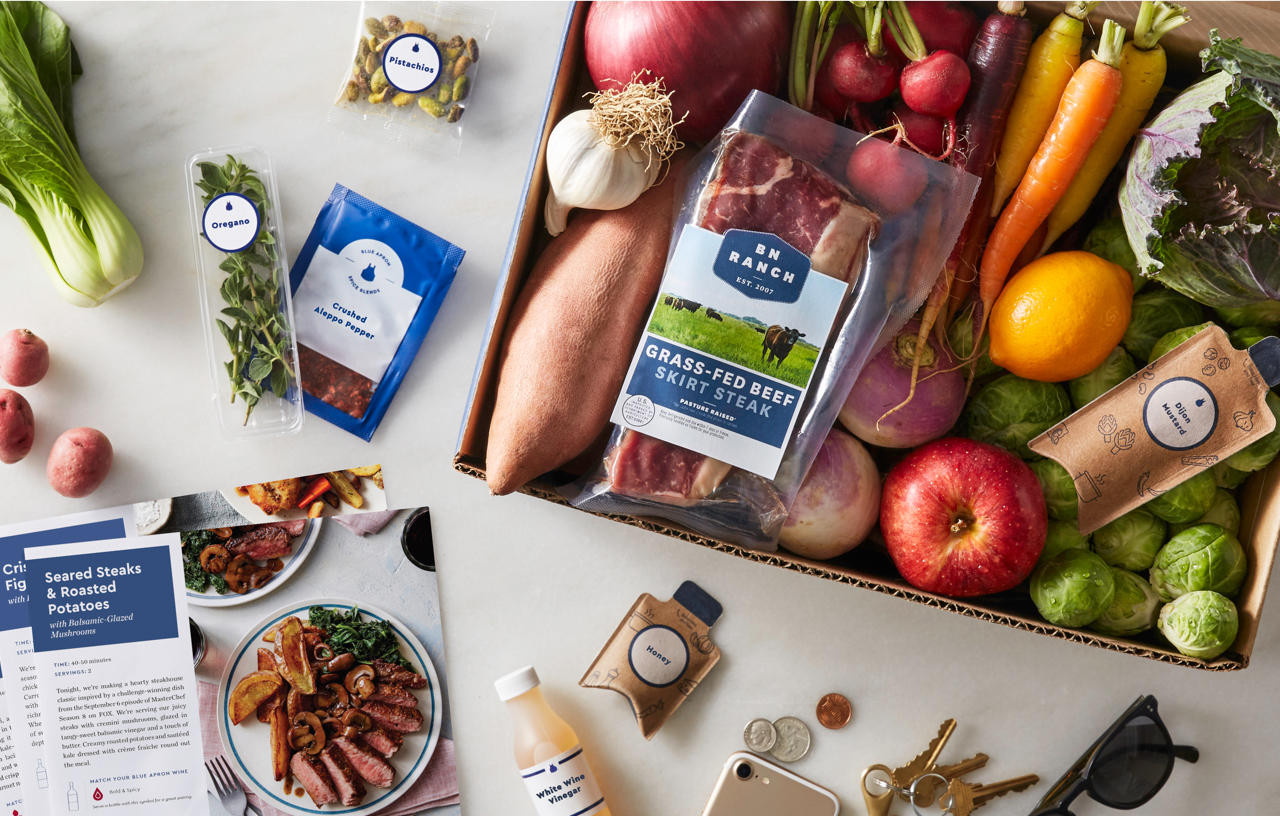
George Glass from Watson-inc wrote on prepared meals: “Prepared meals allow consumers to purchase no more than what they intend to eat and, through subscription, in a predictable way that allows prepared meal companies to optimize their perishables ordering. This predictability can even help guide farmers on how much to grow.”
Of course, these companies are making a profit off of our laziness / lack of time etc. But, it is a interesting way to look at food waste reduction options. And, we can do the same at home without using these services simply by planning our meals, freezing foods and sticking to a list when we go to the supermarket.
(Read more on how to prepare meals and reduce food waste here)
2. Reduce portion sizes
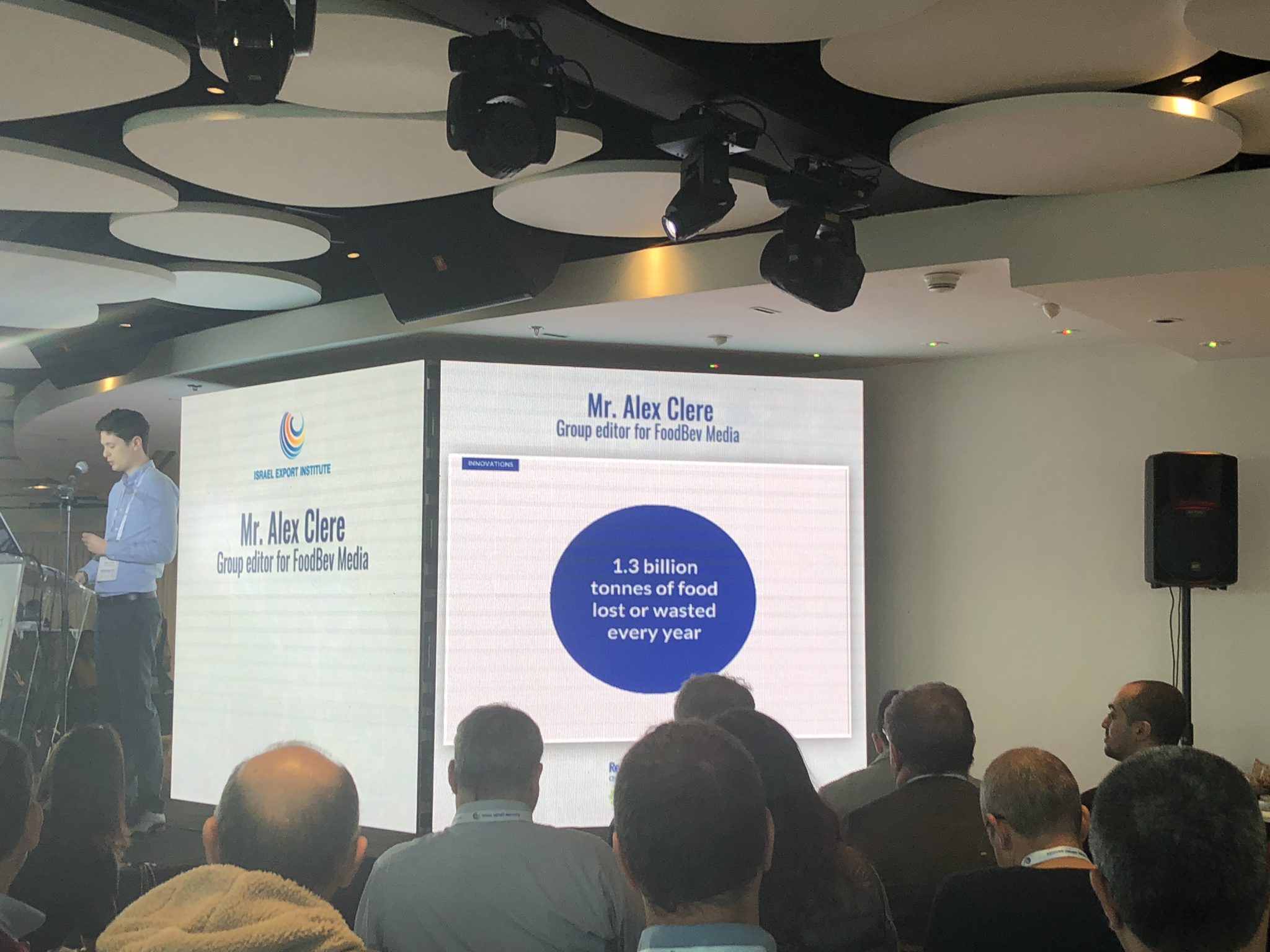
Mr. Alex Clere from FoodBev presented data about food waste that we are all familiar with. He continued with emphasizing that food companies need to do more on sustainability and work on portion control. Nowadays, the number of people per household is lower and by purchasing food in large packages, we see an increase in food waste. He stressed the importance of portion reduction.
3. Food alternatives that reduce food waste
Companies like Innovopro and A1c (the CEO and Co-Founder were speakers at the conference) are creating alternatives for proteins including meat, dairy and fish (and gluten and sugar). According to the FAO, global quantitative food losses and waste per year are roughly 30% for cereals, 40-50% for root crops, fruits and vegetables, 20% for oil seeds, meat and dairy plus 35% for fish.
According to a Ted Talk by Tristram Stuart, for every pound of fish caught, there are up to five pounds of un-targeted species trapped that die as a result. If this continues, our oceans will reach its breaking point.
As for meat production, the waste creation comes in many forms, including waste from concentrated animal feeding operations, antibiotics, slurry, excess fertilizers, and transmittable diseases can wreak havoc on surrounding ecological systems.
In addition, moving to plant-based diets significantly reduce the amount of water used to produce meat and dairy products.
According to the Vegetarian Resource Group, a vegan diet uses at least three times less water, and if the plants are grown organically, creates little to no pollution.
Overall
It was an interesting conference. From the food waste perspective, it seems as though companies are moving into the field and are increasing their responsibility to the issue, however not with high priority (at least from what was presented in the conference). Moreover, the majority of the speakers didn’t speak directly about the issue or make many references to food waste (only 2 did and one speaker who lost his voice and didn’t speak), which is a shame due to the resources and potential in the room to highlight this important issue which could potentially solve the increasing food problem of the future.
I hope to see this issue highlighted in future conferences.
There is still a lot more to do to significantly reduce food waste and from what it looked like in the conference, food companies can still do more to improve this situation.
I’ll continue to keep you updated and informed 🙂
 Where the food goes